Call us: +44 01908 040374
  Opening hours: Mon - Fri: 9:00am To 6:00pm





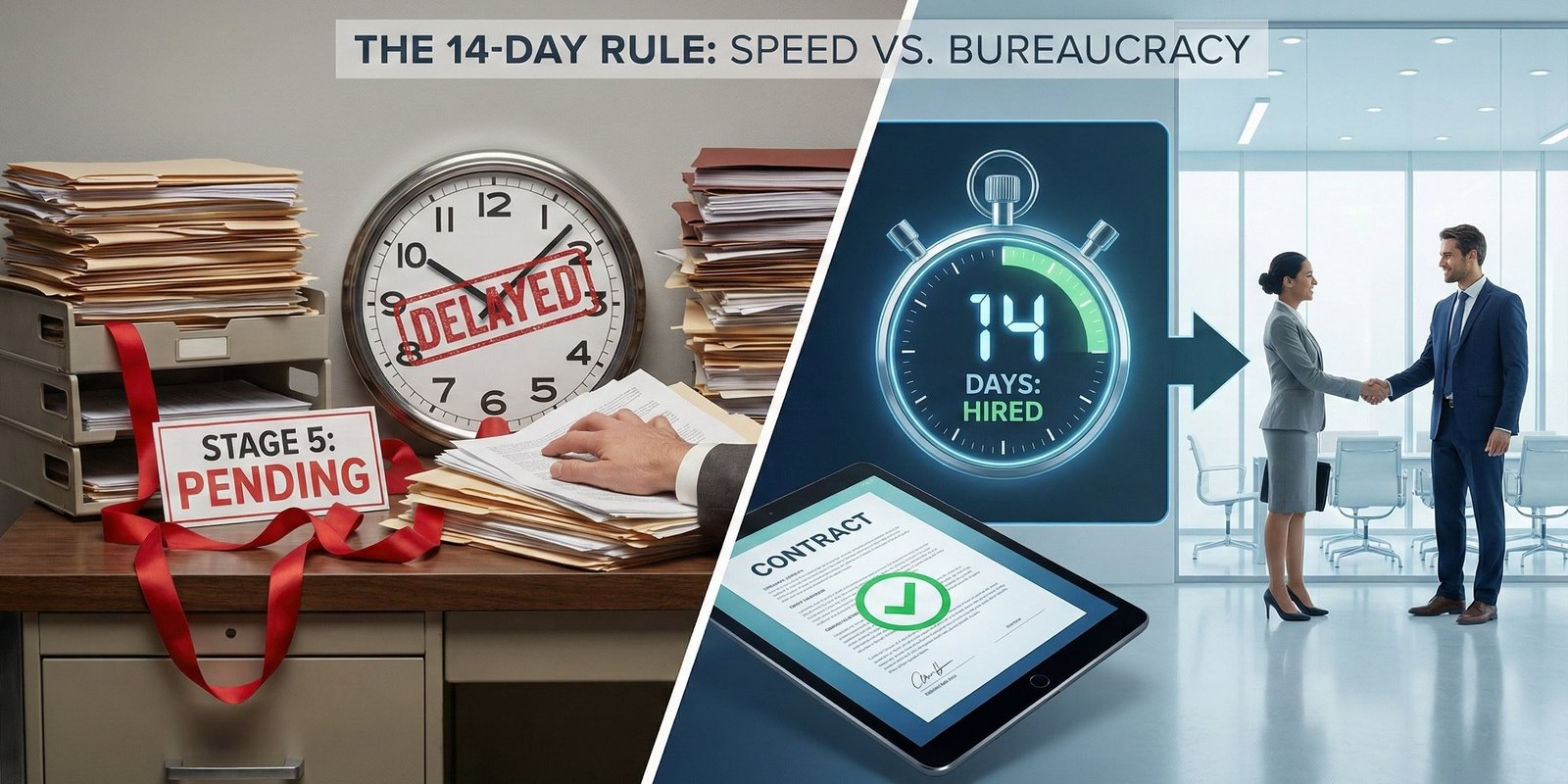
There is a dangerous misconception in the UK hiring market right now. Many Hiring Managers and internal HR teams operate under the belief that “If we add another interview stage, we reduce the risk of a bad hire.”
It sounds logical on paper. More time equals more data, and more data equals a better decision, right?
In the current market, the opposite is true.
While a five stage interview process might look like "rigour" to your internal stakeholders, to the external market, it looks like indecision. And in the battle for top tier talent, indecision is the single biggest reason companies lose out to their competitors.
Here is why the 4 week interview cycle is dead, and why speed is the new currency of recruitment.
The Illusion of Rigour
We frequently see interview processes that look like this:
- HR Screen / Recruiter Screen
- Line Manager Interview
- Technical Task or Presentation
- ‘Meet the Team’ / Culture Fit check
- Director Final Sign off
By the time you coordinate five different diaries for five different stages, a month has passed.
You have to ask yourself: Does stage 4 actually tell you something new, or is it just for comfort?
Often, excessive interview stages are not about assessing the candidate’s capability; they are about spreading the blame in case the hire doesn't work out. It is 'decision by committee,' and it is fatal to agility.
The Data: The 10-14 Day Window
If you are hiring for average talent, you can take your time. Average candidates will wait because they have fewer options.
But you don’t want average. You want the top 10%. The high performers who drive revenue and innovation.
Our data shows that high quality, active candidates remain on the market for an average of just 10 to 14 days.
If your process takes three weeks to organise, the timeline usually looks like this:
- Week 1: You interview them and are impressed.
- Week 2: You struggle to find a slot for the presentation stage. Meanwhile, your agile competitor is conducting their final interview.
- Week 3: You are ready to make an offer, only to find the candidate is already being onboarded elsewhere.
When this happens, you don't just lose the candidate. You are left with a choice: restart the search from scratch (costing time) or hire the 'best of who is left' (costing quality).
The Hidden Cost of the "Empty Chair"
Beyond losing the candidate, a slow process carries a tangible financial cost.
Let’s say you are hiring a Sales Manager or a Senior Developer. Every week that chair sits empty is a week of lost productivity, lost revenue, or delayed project delivery.
If you delay a hire by four weeks to ensure 'perfect cultural fit,' you might save yourself from a potential hiring mistake, but you have guaranteed a month of lost output. Often, the cost of the delay outweighs the risk of the hire.
The Solution: The Sprint Process
Being fast doesn't mean being reckless. You can still be rigorous without being slow. The most successful companies we work with have moved to a 'Sprint Process.'
Here is what that looks like:
- Fewer, Better Interviews: Consolidate stages. Why can't the 'Technical Task' and the 'Culture Fit' happen in one longer session? Aim for a maximum of two to three stages.
- Pre-Block Diaries: Before you even see a CV, block out time in the Line Manager’s and Director’s diaries for first and second stage interviews. If you don't find a candidate, you get the time back. If you do, you can book them in immediately.
- Efficient Feedback Loops: Feedback should be given within 24 hours. Momentum is psychological, if a candidate hears back quickly, they feel wanted. If they wait a week, they feel like a backup option.
- The 'One-Touch' Close: Have your offer letter, contract, and benefits package ready to go before the final interview. If you make a verbal offer, the paperwork should land in their inbox the same day.
Think back to the last time you were interviewing for a new job. The waiting is stressful. Silence kills excitement.
When a candidate is excited about you, and you are excited about them, that is the moment to act.
A streamlined, decisive process doesn't just help you secure the candidate, it sends a powerful message about your company culture. It tells the candidate that you are agile, efficient, and respectful of their time.
In 2026, you aren't just assessing their skills, they are assessing your agility. Don't let your process be the red flag.